
Historical Timeline
1960: Welplan Is Born
Holiday pay and sick pay created within HVCA.
1964: Rob Woodland Joins HVCA
Rob Woodland joined as Company Secretary and Controller.
1960s: Holiday Pay Expands
Holiday pay grew from 2 weeks to 4 or 5 weeks plus bank holidays.
Early 1970s: CCH To H&V Welfare
CCH rebranded as H&V Welfare Ltd.
1975: Welfare Schemes Established
Trust funds for death benefit, PTD, AD and sick pay were created.
1980: Old Mansion House Purchased
The group purchased Old Mansion House in Eamont Bridge.
1982: OMH Opens
The Old Mansion House offices officially opened.
1990: TICA Added
The TICA scheme was added to the welfare offering.
1999: Welplan Rebrand
H&V Welfare rebranded to Welplan Ltd.
2006: ECIA Added
The ECIA scheme was added to the programme.
Founded In 1960
Welplan was founded in 1960, but this story of Welplan’s early years begins in November 1964, when Rob Woodland joined the HVCA as Company Secretary and Controller. He entered an organisation led by Geoffrey Cutting and supported by the formidable Lillian Conway, a secretary whose service with the group stretched back before the Second World War.
At that time, what is now known as Welplan operated under a different name: Credit Card Holidays (CCH). Its purpose was practical and essential: to administer holiday pay for operatives through a secure stamp-based scheme. These stamps were of significant value and were treated accordingly, tightly controlled, securely printed, and stored in heavy fireproof Chubb safes.

The organisation’s home was at 172 Buckingham Palace Road in London. CCH occupied offices on the second floor, while HVCA conducted its operations on the fourth. By 1964, around 30,000 operatives across the plumbing, heating and ventilation industries participated in the holiday pay scheme, a clear sign of its early importance and reach.
Growth Through The 1960s
The 1960s brought substantial change. Holiday entitlement steadily increased from two weeks to as many as four or five weeks plus bank holidays. Operatives could redeem their stamps through their employers or directly with CCH if they had moved on.
Surpluses generated by the scheme, not profits, were prudently reinvested and also used to fund the printing of the HVCA National Agreement, ensuring the industry had the guidance it needed each year.
As time went on, CCH expanded the benefits it provided. Sick pay was introduced, funded by available surpluses. In the early 1970s, reflecting its evolving purpose, CCH adopted a new name: H&V Welfare Ltd.
The Move To Penrith
The next chapter in the organisation’s story began with a chance moment. When the Buckingham Palace Road offices were earmarked for demolition, CCH needed to find a new home.
During a journey back from Glasgow, Rob happened upon a copy of The Cumberland News and noticed an advertisement for a derelict property in Penrith. Curious, he arranged an urgent viewing. That decision would change the company’s future.
The association council agreed to purchase the building at 10 King Street, on the condition that Rob relocate to Cumbria for at least five years to lead the new office. He accepted, marking the beginning of H&V Welfare’s long-standing presence in Penrith.
Establishing The Trust Funds
In 1975, the organisation established a series of discretionary trust funds. These provided death benefit, permanent total disability, accidental dismemberment, and sustained the sick pay arrangements already in place.
To protect the trust funds against catastrophic losses, Excess of Loss and Stop Loss insurance were arranged through a captive insurer based on the Isle of Man. Board meetings were held there, and in the early years, Rob, who held a pilot’s licence, flew himself across the Irish Sea. As the meetings grew in size, the organisation transitioned to charter flights from Blackpool.
Modernisation And Expansion
By the 1980s, H&V Welfare was continuing to modernise. It became the first organisation on King Street to install a mainframe computer, so large that a window had to be removed to bring it into the building.
Demand for space grew quickly after the Publications department relocated to Penrith and an in-house print facility was established.
To accommodate this growth, the group acquired Old Mansion House in Eamont Bridge in 1980. The building had lived several lives: an actual mansion house, Penrith’s nineteenth-century workhouse, and, most recently, a hotel.
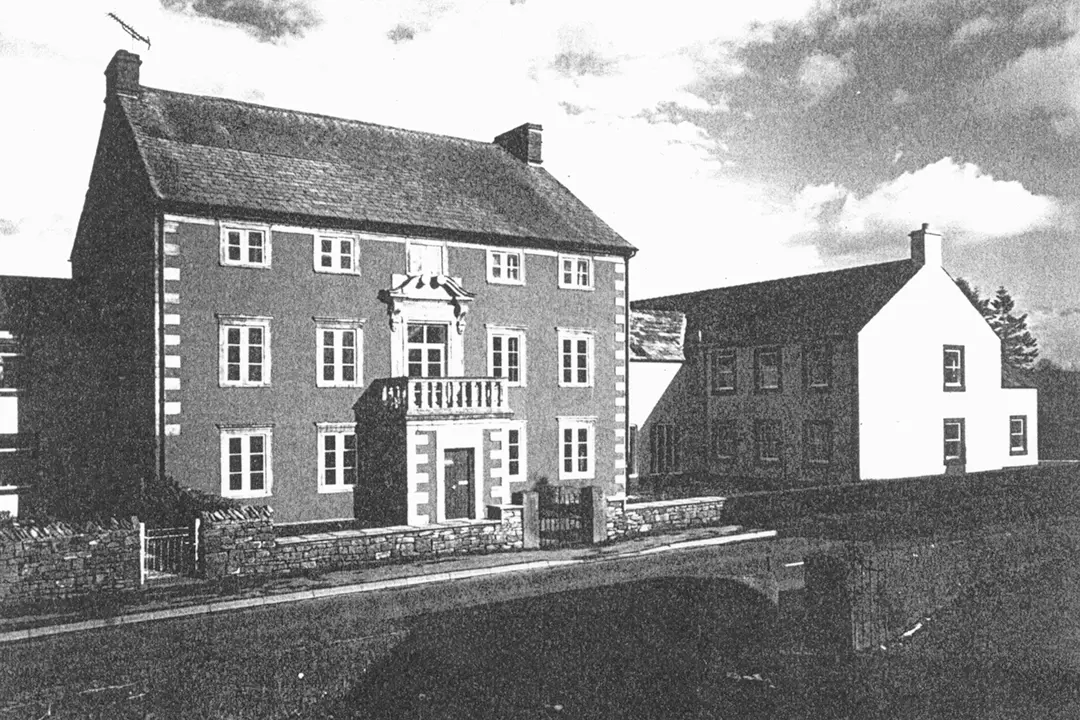
After purchase, it underwent a considered extension, and a diesel generator was added to offset the unpredictability of rural power supplies. In 1982, the new offices formally opened, marking another major milestone in the organisation’s development.
Becoming Welplan
The years that followed brought continued expansion. The TICA Employee Benefits Scheme was added in 1990, followed by the ECIA Employee Benefits Scheme in 2006.
In 1999, reflecting its broader role and evolving identity, H&V Welfare Ltd rebranded as Welplan Ltd, the name recognised today.
Today, Welplan continues to support employers and employees across the construction industry through tailored employee benefit schemes built around practical support, industry understanding, and long-term trust.
With thanks to Rob Woodland, former Company Secretary and Controller, for helping to put this history of Welplan together.